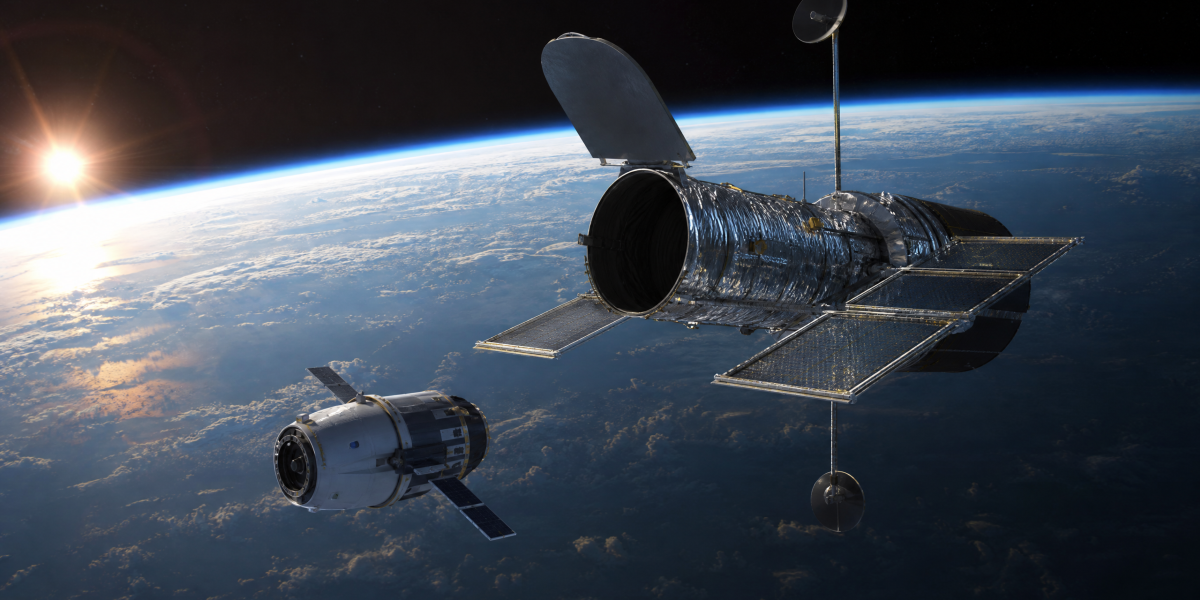
NASA has revised the next step for its Commercial Swift Boost Mission after an attitude-control issue affecting a commercial spacecraft. The agency said the LINK spacecraft will no longer capture and boost the Neil Gehrels Swift Observatory to a higher orbit as originally planned. NASA and Katalyst Space still expect LINK to attempt rendezvous and proximity operations with Swift, a demonstration the agency says could inform future satellite-servicing work.
The update, released Aug. 19, changes the immediate goal of a mission developed on an unusually compressed schedule. Instead of an orbit-boost attempt intended to extend Swift’s science mission, teams will focus on collecting data from the planned rendezvous effort and assessing what it can teach engineers about on-orbit servicing.
What changed in the mission plan
NASA said an ongoing attitude-control issue on the commercial spacecraft means LINK will not capture or raise the observatory’s altitude. The agency did not describe the issue as ending every mission objective. It said the spacecraft will still try to conduct rendezvous and proximity operations, which involve navigating near another spacecraft and demonstrating capabilities relevant to satellite servicing.
In its mission update, NASA said it and Katalyst are evaluating the next steps for rendezvous and gathering data that could help future operations. The distinction matters: a close-approach demonstration is not the same as capturing a satellite or changing its orbit.
The Neil Gehrels Swift Observatory launched in 2004 to study gamma-ray bursts and other changing objects in the universe. NASA says the mission was designed for a two-year prime mission but has conducted science operations for 21 years. Its low Earth orbit has been decaying more quickly because of increased solar activity.
Why the boost attempt was unusual
NASA awarded Katalyst a contract in September 2025 to attempt a robotic servicing mission for Swift in less than a year. LINK launched July 3 on a Northrop Grumman Pegasus XL rocket from Kwajalein Atoll. The agency says teams established communications and completed early on-orbit checkouts before the spacecraft experienced attitude-control issues during commissioning.
Spacecraft servicing is difficult because it combines navigation, propulsion, communication and safety challenges far from direct human intervention. NASA described the Swift effort as a high-risk, high-reward attempt and said the work has already produced lessons about commercial servicing capabilities, even though the planned boost will not go ahead.
The agency said Swift is likely to re-enter Earth’s atmosphere later this year without intervention. NASA also said it will continue looking for ways to respond rapidly to cosmic events with current missions helping to fill any science gap. That is an operational planning statement, not a promise that another mission will replace Swift’s role in the same way.
What to watch next
The next update will concern the proposed rendezvous and proximity operations. NASA said it will use information from the effort to inform future satellite-servicing missions. Katalyst and the agency have continued to work on assessing the spacecraft and the planned operations.
For readers, the larger story is how agencies and commercial partners are testing techniques that may eventually help extend satellite missions, inspect spacecraft or reduce operational risk in orbit. The current mission has been scaled back, but NASA says the remaining demonstration could still supply useful technical data.
What a rendezvous demonstration can still show
Rendezvous and proximity operations are foundational to many future in-space activities, including inspection, servicing and debris-related work. Demonstrating that one spacecraft can approach another under carefully managed conditions can provide information about navigation, communications and operational constraints even if the final capture-and-boost objective is not attempted.
NASA has not said that the remaining work will extend Swift’s science life. Its update instead describes a narrowed technical objective and an effort to gather lessons from an unusual commercial partnership. That is a meaningful distinction for anyone following the mission: the revised plan is a technology demonstration, not an announced rescue of the observatory.
Read more Technology coverage from NY Breaking News. NASA’s original update provides the agency’s complete account of the revised mission plan.