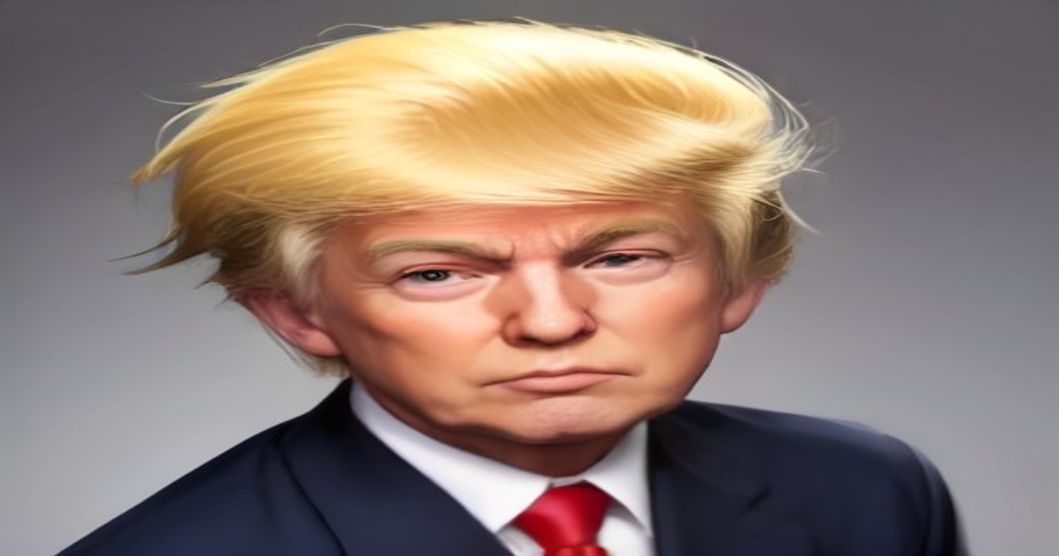
NEW YORK (NYBreaking) — Former President Donald Trump pleaded not guilty on Tuesday to 34 felony counts of falsifying business records inside a Manhattan courtroom, setting up a historic legal battle over alleged hush-money payments before the 2016 election.
Key Takeaways
- Donald Trump formally pleaded not guilty to 34 Class E felony charges of falsifying business records in New York State Supreme Court.
- Manhattan District Attorney Alvin Bragg alleged a systematic effort to suppress damaging stories ahead of the 2016 presidential vote.
- Defense counsel vowed to file aggressive pre-trial motions to dismiss all charges, citing legal flaws and political motivation.
The formal arraignment before New York State Supreme Court Justice Juan Merchan marked the first time in United States history that a former commander-in-chief has faced criminal charges. Trump, 76, arrived at the Lower Manhattan courthouse under heavy law enforcement escort, entering the 15th-floor courtroom shortly after processing by the Manhattan District Attorney’s office.
During the 45-minute proceeding, Trump spoke briefly, uttering “not guilty” in a firm tone when asked how he pleaded to the multi-count indictment. The unsealed document reveals a series of charges tied to financial transactions executed during the 2016 presidential race and into the early months of his presidency.
The Scene Inside Manhattan Supreme Court
Surrounding the courthouse at 100 Centre Street, street closures and multi-layered steel barricades transformed Lower Manhattan into a high-security zone. United States Secret Service agents, New York City Police Department officers, and court officers lined the corridors as Trump walked into the courtroom dressed in a dark blue suit and red tie.
Inside the room, Justice Merchan presided over an intensely packed audience of legal teams, pool reporters, and court personnel. Trump sat at the defense table between lead defense attorney Todd Blanche and co-counsel Emil Bove, maintaining a stern expression throughout the reading of the indictment summary.
“Under New York State law, it is a felony to falsify business records with an intent to defraud and an intent to conceal another crime,” District Attorney Alvin Bragg stated during a press briefing held shortly after the arraignment concluded. “That is exactly what this case is about: 34 false statements made to cover up other crimes.”
Prosecutors argued that the former president participated in an unlawful scheme to acquire and suppress negative information to boost his electoral prospects. The government requested a trial date in early 2024, emphasizing the public interest in a swift resolution.
Detailed Analysis of the 34 Class E Felonies
Every count listed in the unsealed indictment charges Trump with Falsifying Business Records in the First Degree, a Class E felony under New York Penal Law Section 175.10. The charges cover 11 invoices, 11 checks, and 12 general ledger entries logged between February and December 2017.
According to charging documents, these financial entries were structured to disguise monthly payments made to former attorney Michael Cohen as legal retainer fees. Prosecutors contend that the funds were actually reimbursements for a $130,000 payment made to adult film actress Stormy Daniels in October 2016 to secure her silence regarding an alleged encounter.
The Mechanics of Falsifying Business Records
Under the statutory framework outlined by state prosecutors, each individual document processed through the Trump Organization’s accounting systems constitutes a distinct criminal count. The prosecution highlighted three specific categories of documents within the billing workflow:
- Invoices submitted by Michael Cohen: Eleven separate monthly invoices claiming non-existent legal services rendered under a retainer agreement.
- General Ledger Entries: Twelve internal ledger logs mischaracterizing the payments as “legal expenses” paid out of the Donald J. Trump Revocable Trust or personal accounts.
- Checks and Vouchers: Eleven physical checks bearing Trump’s personal signature or authorized trust signatures, matched with corresponding check stubs.
Prosecutors assert that no formal retainer agreement existed for these specific transactions, making the internal classification inherently deceptive under state corporate reporting standards.
Elevating Misdemeanors to Felony Offenses
Falsifying business records in New York is ordinarily a Class A misdemeanor under state law. However, prosecutors elevated all 34 charges to Class E felonies by alleging that the intent to defraud included an intent to commit or conceal another underlying crime.
District Attorney Bragg cited potential violations of New York State Election Law Section 17-152, which prohibits conspiracy to promote or prevent the election of any candidate by unlawful means. Prosecutors also pointed toward tax-related irregularities regarding how the reimbursements were grossed up to offset federal and state tax burdens for Cohen.
Legal analysts following the case note that establishing this link will be central to the district attorney’s case. According to reporting by Reuters, state prosecutors face an untested legal theory by combining state records law with federal election campaign financing limits.
Defense Arguments and Motion Schedule
Following the court appearance, Trump’s defense team gathered outside the courthouse to contest the validity of the charges, declaring that the prosecution lacks basic legal foundation.
“The indictment itself is a boilerplate document,” defense attorney Todd Blanche told reporters on the courthouse steps. “It alleges no federal crime, and it alleges no specific state crime that was committed or intended to be committed. We will vigorously contest every single count.”
Defense attorneys signaled their intention to file multiple pre-trial motions aimed at dismissing the case entirely. Primary legal challenges are expected to focus on:
- Statute of Limitations: Class E felonies typically carry a five-year statute of limitations in New York. Defense lawyers plan to challenge the state’s reliance on executive tolling provisions used to extend filing deadlines during the COVID-19 pandemic and Trump’s tenure in the White House.
- Preemption Concerns: Arguments that a local district attorney lacks jurisdiction to enforce state election statutes against candidates running for federal executive office.
- Selective Prosecution: Allegations of political bias and arbitrary enforcement within the Manhattan District Attorney’s office.
Justice Merchan established a strict schedule for motion practice, setting a late summer deadline for defense filings and ordering prosecution responses shortly thereafter. The court tentatively scheduled the next in-person omnibus hearing for late December.
Broader Legal Precedents and Political Fallout
The criminal proceedings against Trump introduce unprecedented variables into both the American judicial apparatus and the national political climate. With the 2024 presidential primary calendar advancing, the court schedule will run parallel to major political campaign milestones.
Former federal prosecutor Karen McDonald emphasized the operational complexity facing the court. “Trial judges in New York handle high-volume calendars daily, but managing a former president while maintaining jury security and protecting public order presents structural hurdles the state courts have never encountered,” she explained.
Financial markets remained largely steady as news of the plea broke, though political fundraising committees on both sides of the aisle reported immediate spikes in online contributions. The public response reflected deep partisan divisions across major metropolitan centers and rural political districts nationwide.
As the legal process shifts from initial arraignment to complex pre-trial discovery, the Manhattan District Attorney’s office must turn over millions of pages of evidence and grand jury testimony to the defense team. The upcoming evidentiary review will determine the scope of admissible testimony as the legal system prepares for a historic trial.