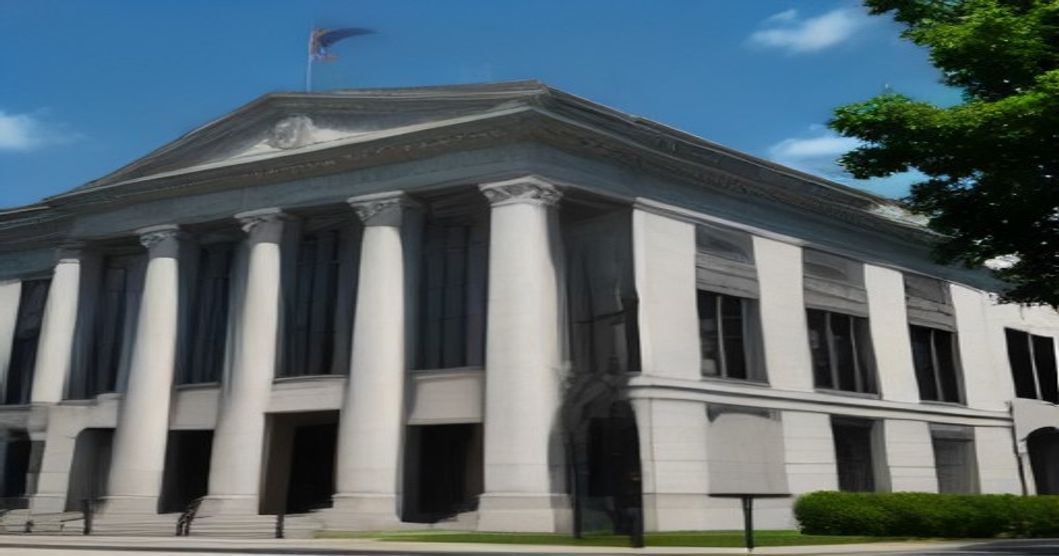
WASHINGTON (NYBreaking) — Former President Donald Trump prepares to appear in federal court tomorrow to face historic criminal charges detailing alleged efforts to overturn the 2020 election results, marking an unprecedented moment in American political history. Security forces in the nation’s capital have established strict perimeter zones surrounding the E. Barrett Prettyman Federal Courthouse, where federal magistrates will process the former commander-in-chief on multiple felony counts brought by Special Counsel Jack Smith.
Key Takeaways
- Historic Precedent: Donald Trump faces four felony counts stemming from the Special Counsel investigation into the 2020 election aftermath.
- Courtroom Logistics: The former president will be processed, fingerprinted, and formally read his charges before a federal magistrate judge.
- Heightened Security: Multi-agency security protocols are active across Washington, featuring steel barricades and enhanced Capitol Police deployments.
Unpacking the Four Core Charges
The federal indictment returned by a grand jury outlines a structured, multi-part strategy to disrupt the certification of presidential electors. Prosecutors from the Department of Justice have framed the allegations around four primary legal violations that carries substantial maximum prison terms if convicted.
The primary charge includes conspiracy to defraud the United States under Title 18 of the U.S. Code. This count alleges that the defendant used dishonest, deceitful, and fraudulent means to impair, obstruct, and defeat the lawful function of the federal government. Specific overt acts cited in the court filings detail coordinated pressure campaigns targeting state election officials, fake elector schemes across six battleground states, and repeated attempts to leverage the Department of Justice to validate unverified voter fraud claims.
The second and third counts center on the obstruction of an official proceeding—specifically, the joint session of Congress convened on January 6, 2021, to count electoral votes. Prosecutors assert that efforts to delay and derail this constitutional procedure constitute both a direct act of obstruction and a conspiracy to commit obstruction under federal corruption statutes.
The fourth charge utilizes a Civil Rights Act statute dating back to the Reconstruction era. Title 18, Section 241 makes it a crime to conspire to injure, oppress, threaten, or intimidate any person in the free exercise or enjoyment of any right secured by the Constitution or laws of the United States. In this context, prosecutors argue the scheme sought to deprive millions of American citizens of their statutory right to have their votes lawfully counted.
“The indictment relies on established federal statutes, but applying them to a former president presents an unprecedented trial environment,” said Marcus Vance, senior constitutional analyst at the Center for Judicial Studies. “The government must prove beyond a reasonable doubt not only that the actions occurred, but that the defendant possessed the requisite criminal intent to defraud while knowing the claims were false.”
The Arraignment Protocol and Logistics
Tomorrow’s proceedings inside courtroom 22A will follow strict judicial protocols established by the U.S. District Court for the District of Columbia. Although the defendant is a former head of state accompanied by full United States Secret Service protection, court officials emphasize that standard administrative processing will apply.
Fingerprinting, Booking, and Pre-Trial Conditions
Upon entering the federal facility through secured underground corridors, the former president will be placed under formal arrest by Deputy U.S. Marshals. Electronic fingerprinting and standard biographical recording will occur inside the Marshals’ processing area. According to law enforcement sources familiar with the planning, no mugshot is expected to be taken, as existing official photography remains accessible to federal authorities.
During the initial appearance before Magistrate Judge Moxila A. Upadhyaya, the court will formally present the Reuters confirmed indictment, read the charges, and advise the defendant of his constitutional rights. Defense attorneys will enter a formal plea on behalf of the former president, who has publicly maintained his complete innocence and characterized the prosecution as politically motivated.
Pre-trial release conditions will form a central part of the hearing. Federal prosecutors are not anticipated to request pre-trial detention. Instead, the magistrate is expected to impose standard release conditions, which typically include restrictions on discussing case details with potential witnesses, requirements to appear for all scheduled court dates, and obligations to abide by federal and state laws while on release.
Security Operations Across Capitol Hill
The United States Secret Service, working in coordination with the U.S. Marshals Service, the Metropolitan Police Department, and federal park police, has established extensive exclusion zones. Black anti-scale fencing now encircles the E. Barrett Prettyman Courthouse, limiting pedestrian access along Constitution Avenue and Third Street Northwest.
“Our primary objective is maintaining public safety while ensuring the uninterrupted operation of the judicial system,” federal security coordinator Helen Vance stated during a joint briefing. “We have deployed comprehensive resources across the federal enclave to address potential demonstration activity and maintain immediate perimeter security.”
Reporting from the Associated Press indicates that Capitol Police officers have been placed on standby alerts, with regional quick-reaction forces available if crowds gather near the court or legislative grounds.
Defense Strategy vs. Prosecution Timeline
The legal strategy put forward by the defense team is anticipated to challenge the core premises of the indictment on constitutional and statutory grounds. Early legal filings and media statements from the defense team indicate a heavy reliance on First Amendment protections regarding political speech and public discourse.
Defense attorneys argue that a president maintains the right to question election integrity, challenge administrative outcomes, and express beliefs regarding political processes. They contend that relying on legal advice from licensed attorneys negates the criminal intent required for fraud charges.
“Political speech, even speech that is vigorously contested, remains protected under the First Amendment,” stated defense legal consultant Arthur Reynolds. “The defense will systematically demonstrate that the actions in question were undertaken in good faith based upon advice of counsel and within the scope of presidential duties.”
Conversely, Special Counsel Jack Smith has emphasized the government’s readiness to proceed with a swift trial. Prosecutors argue that while speech itself is protected, committing illegal acts, submitting fraudulent documentation to federal entities, and disrupting official proceedings cross the boundary from protected speech into criminal conduct.
The immediate legal battle following the initial court appearance will center on the trial schedule. Prosecutors are expected to press for a rapid pre-trial motion schedule, while the defense will likely seek extended timelines, citing the immense volume of discovery material, including hundreds of thousands of pages of interviews, digital messages, and grand jury transcripts.
Political and Institutional Aftershocks
The timing of the indictment coincides with the active 2024 presidential campaign season, in which Donald Trump currently leads polling for the Republican nomination. The overlap between courtroom appearances and primary debate schedules creates a complex scenario for both major political parties.
Congressional leadership remains sharply divided over the prosecution. House Republicans have announced plans to launch oversight inquiries into the Department of Justice’s investigative methods, raising questions regarding equal application of the law. Democratic lawmakers have urged the public to allow the judicial process to proceed without external interference, emphasizing that no individual operates above federal statutes.
As the capital prepares for tomorrow’s court session, political analysts and legal scholars agree that the proceedings mark a profound test of the nation’s legal institutions. The upcoming pre-trial motions will test constitutional boundaries, set precedents for executive privilege claims, and establish how the American judicial system balances high-stakes criminal proceedings with national electoral calendars.