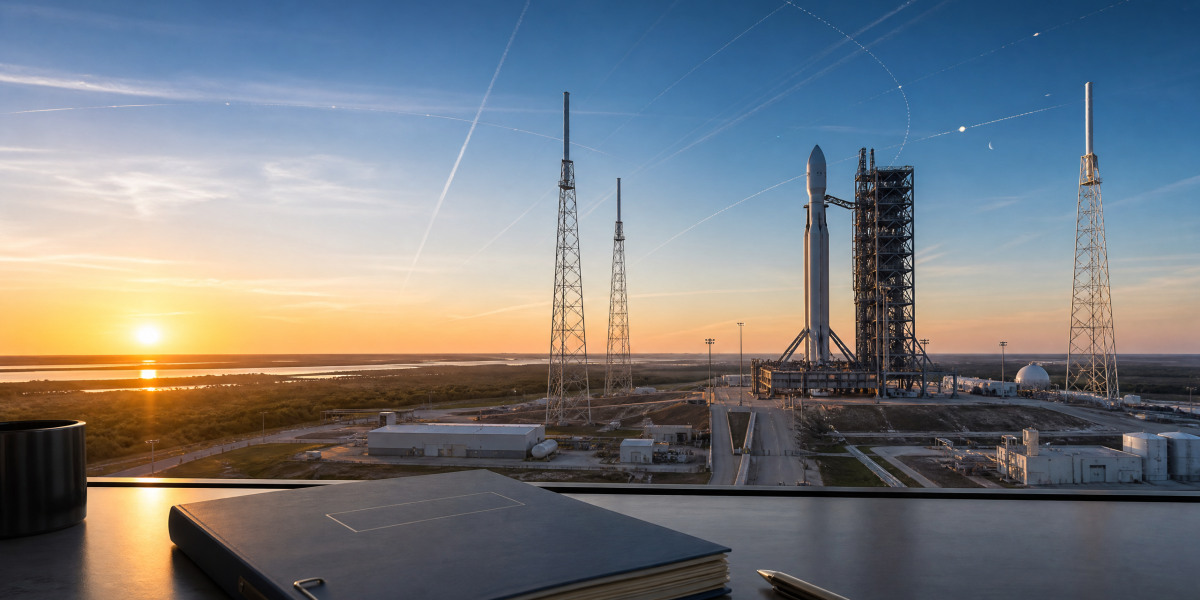
President Trump signed a National Security Presidential Memorandum on August 20, 2026, the White House said, replacing an earlier national space transportation policy and setting a stated goal for 2030 to enable more than 1,000 launches and reentries annually on American soil. The memorandum lays out a series of policy directives for federal agencies intended to speed approvals, encourage government-industry infrastructure projects, and examine additional locations and scheduling practices to support a higher cadence of launch and reentry activity.
Details of the memorandum were summarized in a White House fact sheet published the same day. The fact sheet provides the administration’s own listing of the actions the memorandum directs and the objectives it defines.
Key actions the memorandum directs
The memorandum directs agencies to pursue a range of operational and policy steps intended to increase the frequency of launches and reentries in the United States. The White House summarized several specific areas for action; those areas identify broad categories of work federal agencies are to undertake rather than concrete, completed changes.
- Expediting permitting and environmental reviews tied to launch and reentry activities, which the memorandum frames as reducing the time and administrative barriers for approvals that launches and reentries currently require.
- Co-developing infrastructure with private-sector partners to support increased flight rates, indicating a role for government-industry collaboration in expanding physical capacity on U.S. soil.
- Establishing range scheduling criteria to improve the use of existing launch ranges and manage higher frequencies of activity.
- Evaluating additional domestic locations that could support launches and reentries, which involves assessing whether new sites could expand national capacity.
Each listed action is a directive for further study, planning, or procedural change. The memorandum sets priorities and asks agencies to take steps in these areas, but it does not, in itself, create completed infrastructure or guarantee that specified outcomes will occur by particular dates beyond the stated 2030 goal.
NASA responsibilities in the memorandum
The memorandum includes distinct directions aimed at NASA. It asks the agency to facilitate commercial transportation to and from the Moon, to enable commercial robotic access to Mars, and to explore commercial avenues for human travel to and from Mars. Those items are described as tasks for NASA to pursue as part of broader national space-transportation goals.
These lines in the memorandum are policy directives: they instruct NASA to undertake planning, coordination, or enabling activities. They do not represent completed missions, established contracts, or guarantees that particular missions will take place.
What agencies are asked to change
The memorandum’s directives emphasize administrative and coordination changes rather than the immediate delivery of new rockets, pads, or missions. The guidance focuses on actions such as reducing timelines for approvals, creating joint development arrangements with industry, and revising how launch ranges are scheduled and used. It also directs an assessment of whether additional launch and reentry sites could expand capacity on U.S. soil.
Translating those administrative and policy changes into a higher number of launches will require multiple steps, including decisions within and among federal agencies and follow-through by private-sector partners. The memorandum sets the direction and identifies areas for agency action, but it does not specify the detailed implementation plans, deadlines for each action, or the budgetary decisions that would be needed to carry them out.
| Directive | Focus |
|---|---|
| Permitting and environmental-review acceleration | Speed approvals needed for launches and reentries |
| Infrastructure co-development with private partners | Expand physical capacity through government-industry projects |
| Range scheduling criteria | Improve use and availability of launch ranges |
| Evaluation of additional locations | Assess new sites for launches and reentries |
| NASA directives | Facilitate commercial lunar transport, robotic Mars access, and explore commercial human Mars travel |
Limits, scope and what remains unknown
The White House framed these elements as policy directives and goals rather than as completed projects. The stated 2030 target — enabling more than 1,000 launches and reentries annually on American soil — is presented as a goal for national capability rather than as an outcome already achieved.
The memorandum replaces the prior national space transportation policy and sets new priorities for federal agencies to pursue. What remains unspecified in the memorandum includes the detailed steps agencies will take to implement the directives, the precise timelines and milestones for each task, how funding and resources will be allocated, and how success toward the 2030 goal will be measured.
Implementation will require further actions by multiple agencies and by private-sector partners. The memorandum provides direction for agencies to take steps such as permitting changes and infrastructure planning, but follow-through and concrete outcomes are left to subsequent planning and action. For the administration’s full summary of the memorandum’s contents and the list of directed actions, see the White House fact sheet linked above. For more reporting on technology policy and related developments, visit our Technology section: Technology.