It is a potentially fatal health condition that affects more than half of all British adults.
High cholesterol causes a sticky form of fat to build up in the arteries, blocking blood flow. If left untreated, it can increase the risk of heart attack, stroke and even dementia.
And the problem is only becoming more common, with more and more young people aged 30 and under being diagnosed.
As a result, almost eight million people in Britain and around 92 million in the US use statins – a daily tablet called lowers so-called ‘bad’ cholesterol levels.
For many, statins are life-saving. But the drug is not without side effects, with common side effects including muscle pain, digestive problems and headaches.
And for others, statins aren’t enough. Half of those who take the pills do not achieve healthy cholesterol levels after two years.
Now experts have told The Mail on Sunday that millions of people could benefit from a highly effective plant-based diet that can lower cholesterol almost as much as medication.
The Portfolio Diet, created by Canadian researchers in 2002, focuses on four major food groups known to lower cholesterol: fiber, unsaturated fats, nuts and legumes.
Changes to your diet can combat high cholesterol, which affects eight million people in Britain
Each has previously been shown to work independently to remove excess cholesterol from the body.
But Dr. David Jenkins, the creator of the plant-based diet and professor of nutritional sciences at the University of Toronto, says these foods, combined, can work much like a financial portfolio — taking multiple approaches to maximize returns.
The numbers seem to speak for themselves. Research shows that the Portfolio Diet can reduce LDL cholesterol (the “bad” cholesterol) levels by as much as 35 percent in just one month – about the same reduction as some forms of statins provide.
For years, researchers disagreed about the diet’s long-term effects on heart health. But recent research has settled this debate.
A study from Harvard, which looked at the diets of nearly 210,000 healthcare workers in the US over 30 yearsResearch found that those who followed the Portfolio Diet the most had a 14 percent lower risk of cardiovascular disease than those who followed it the least.
Prof Jenkins says: ‘More and more people have increased their cholesterol. But not all require heavy cholesterol reduction – as many of the newer, stronger statins provide. For most people, a smaller cholesterol reduction – such as that achieved by diet – is sufficient. And it will benefit everyone who wants to eat healthier, not just those who want to lower their cholesterol.”
So what is the Portfolio Diet and why does it have such a profound effect on cholesterol levels?
First, it is important to understand the nature of cholesterol. There are different types of waxy substance in the body. But the two most important ones are high-density lipoprotein, or HDL, the “good” kind, and low-density lipoprotein, or LDL, the “bad” kind.
LDL can form plaques that block arteries, increasing the risk of fatal complications. HDL, meanwhile, is intended to remove LDL by moving it from the bloodstream to the liver, where it is filtered from the body. When HDL levels become too low, LDL can accumulate uncontrollably.
It has long been known that diet can influence this balance, with foods high in saturated fat, such as red meat and dairy products, shown to increase LDL levels in the blood.
And while some cases of high cholesterol are based on genetics, poor lifestyle habits are the most common cause of high LDL cholesterol. These can include drinking too much alcohol, smoking, not getting enough exercise and eating a high-fat diet.
Certain dietary changes have therefore been shown to be particularly effective in lowering cholesterol levels.
For example, stopping or significantly reducing red meat consumption can lower LDL cholesterol by about 10 percent. And the famous Mediterranean diet, that emphasizes fruits, vegetables, whole grains, nuts and fishcan typically achieve a 13 percent reduction over a few months.
For lunch, try a salad with chickpeas, leafy greens, avocado and sunflower seeds, drizzled with olive oil or, if you’re on the go, a whole-grain wrap with hummus, chickpeas, roasted vegetables and salad
But some experts now say that none of these dietary changes can match the cholesterol reduction that the Portfolio diet provides.
The benefits lie in the combined approach, says Dell Stanford, senior dietitian at the British Heart Foundation. She adds: ‘Many different foods can lower bad cholesterol, whether that’s oats, beans or certain vegetables. But these tend to only reduce it individually by a relatively small amount.
‘The idea behind the Portfolio Diet is that by combining as many of these individual foods as possible will result in a large reduction in cholesterol levels. And studies have shown this, with the greater reduction occurring in patients who adhere most strictly to the diet.”
The first food group it focuses on, says Professor Jenkins, is fibre. Or more specifically, a subtype known as viscous fibers.
It is already known that fiber, a form of carbohydrate, has several health benefits. Research has shown that it can help with weight loss, regulate blood sugar levels and even reduce the risk of colon cancer. But experts say this particular type of fiber, found in foods such as oats, barley, beans, lentils, eggplant, sweet potatoes, apples and citrus fruits, and seeds such as flax and chia, has particular benefits for the heart.
This is because it forms a gel in the digestive tract. This sticky substance then binds to cholesterol and bile acids, preventing their absorption into the bloodstream and forcing the body to excrete them as a waste product.
To replace the secreted bile acids, the liver instead takes more cholesterol from the blood, further lowering LDL cholesterol levels.
The second most crucial food group is plant proteins.
Professor Jenkins says: ‘Plant proteins such as tofu or tempeh, as well as nuts, seeds and legumes, appear to work by reducing the amount of cholesterol produced in the liver.’
Experts say tofu can work well as part of a “portfolio” diet
Because plant-based protein sources are also low in saturated fat and often high in fiber, they are a heart-healthy replacement for animal protein sources. Unsaturated fats, especially monounsaturated fats such as extra virgin olive oil, have a similar effect: they produce much less cholesterol than saturated fats such as butter when metabolized in the liver.
A large Spanish study published in 2013 found that following a healthy Mediterranean diet, supplemented with nuts or extra virgin olive oil, significantly reduced the risk of cardiovascular disease compared to a low-fat diet.
Other heart-healthy options include canola, soy or sunflower oil, adds Prof. Jenkins.
Finally, a natural compound from plants known as sterols rounds out the Portfolio diet. Plant sterols are structurally similar to cholesterol and effectively take their place to block its absorption. They occur naturally in nuts, pea and canola oil, which you can use for cooking, but they can also be found in certain fortified foods.
The food company Benecol, specialized in cholesterol-lowering foods, sells margarine and fruit yoghurts enriched with plant sterols. ‘Combined, these all work to increase the amount of bad cholesterol excreted from the body and reduce its reabsorption into the body,’ says Professor Jenkins. ‘Therefore, the diet may have a similar effect to a statin.’
However, the diet’s benefits don’t stop at cholesterol, experts say. A 2023 study by researchers in Canada found that postmenopausal women who dieted had a 31 percent lower risk of type 2 diabetes, another major cardiovascular risk factor for heart disease.
Some people may also find it helpful in weight loss, says nutritionist Rhiannon Lambert.
She has noticed an increase in client interest in the Portfolio Diet in recent years at her London clinic Rhitrition.
“The diet is not designed as a weight loss plan, but some people can lose weight if they naturally reduce their total energy intake (calories) or increase their intake of fiber-rich foods that promote satiety,” she says. ‘Foods such as oats, beans, vegetables and fruit can help with post-meal satisfaction, which can support appetite regulation.’
An example of a food day, she suggests, might be soy milk porridge for breakfast, topped with berries and a small handful of nuts. For lunch, try a salad with chickpeas, leafy greens, avocado and sunflower seeds, drizzled with olive oil or, if you’re on the go, a whole-grain wrap with hummus, chickpeas, roasted vegetables and salad.
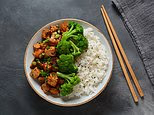
Dinner can be a simple stir-fry, with tofu and mixed vegetables such as broccoli, in addition to rice. And for pudding, a sterol-enriched yoghurt with berries and nuts.
But the main benefit of the diet, Ms. Lambert adds, lies in its flexibility.
‘Because the main components of the diet are food groups, rather than specific foods, there is no one right way to follow it.
“It can be tailored to an individual’s preferences, cultural background, health needs and lifestyle,” she says.
Although meat is not technically allowed on the Portfolio Diet, it should be okay to eat small amounts of lean proteins, such as chicken, and fish.
But it is important that people who are already taking prescribed statins do not simply do so stop taking itwarns Ms Stanford of the British Heart Foundation.
“People already living with cardiovascular disease will need to lower their cholesterol levels much further than the general public, and to achieve that they will almost certainly need statins,” she says.
‘This diet is a great addition to achieving that goal, but it should not replace medication.
“But if you’re a relatively healthy person and are trying to keep your cholesterol levels low, this diet is a great way to do that.”
‘Taking into account that it is estimated that around half of all adults in Britain are living with cholesterol levels that are higher than they should be, there are many people who could benefit from following the Portfolio diet.’