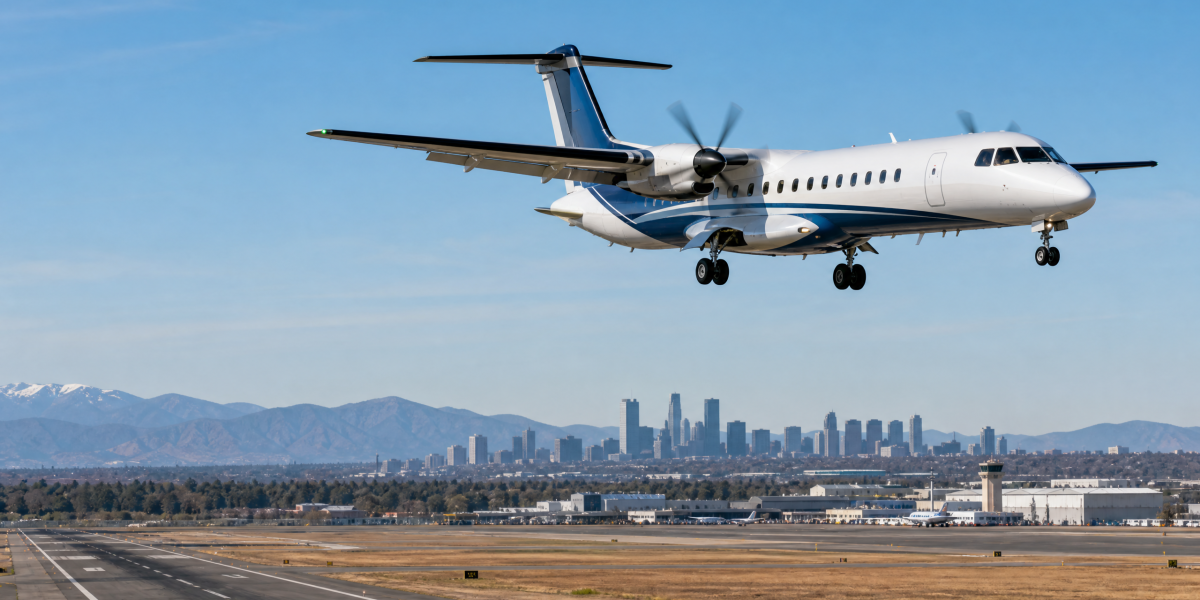
FAA Hybrid-Electric Demonstrations Link Small Airports and Major Hubs
The Federal Aviation Administration announced on Aug. 18 a series of demonstration flights that used hybrid-electric aircraft to operate between Manassas, Virginia, and Philadelphia, Pennsylvania, with multiple regional stops. The FAA described the flights as demonstrations conducted under its eVTOL Integration Pilot Program and said the activity was intended to gather data to inform future work on Advanced Air Mobility integration.
Overview of the demonstration series
According to the FAA announcement, the demonstration flights ran between Manassas and Philadelphia and included intermediate stops at five airports identified by the agency. The stops listed for the hybrid-electric route were Manassas; Millville; Atlantic City Bader Field; Northeast Philadelphia; and Philadelphia International. The FAA presented the sequence of locations as the route points for the demonstration flights and named the participants involved in carrying out the activity.
Participants named in the announcement
The FAA announcement identified Electra as the operator of the demonstration flights and named the Pennsylvania Department of Transportation and the New Jersey Department of Transportation as coordinating partners. The agency presented those entities as participants in the demonstrations and as part of the effort to collect operational data on hybrid-electric operations along the specified route.
Program context: eVTOL Integration Pilot Program
The FAA characterized this activity as part of its eVTOL Integration Pilot Program. In the announcement the agency framed the series as demonstrations and data-gathering exercises under that program. The FAA said the purpose of the demonstrations was to inform how advanced electric and hybrid aircraft might operate in the national airspace and to support integration planning within the broader Advanced Air Mobility framework.
Data collection goals and agency objectives
Per the FAA announcement, the agency will use data gathered from the demonstration flights to identify gaps and improve procedures. The FAA said it will use these findings to support safe Advanced Air Mobility integration. The announcement described those steps as part of an iterative process based on demonstrations and analysis, with the gathered data informing where procedures or systems may require refinement.
Limits of the demonstrations as described by the FAA
The FAA emphasized that these activities were demonstrations intended to collect operational information. The announcement explicitly did not describe the flights as establishing certification, commercial service or operational approvals beyond the stated demonstration objectives. Instead, the FAA presented the results as inputs to further work on procedural or system refinements needed to support Advanced Air Mobility concepts.
Official account and where to read it
Readers seeking the FAA’s formal account can consult the FAA announcement linked below. The agency’s news release is presented as the source for the schedule, listed participants and the FAA’s stated intentions for using the demonstration data. The announcement is available from the FAA’s newsroom as an official account of the demonstrations: FAA announcement on hybrid-electric demonstrations.
This coverage also links to a related local reporting category for readers interested in similar technology developments and transportation pilots: Technology. The FAA’s announcement frames the flights as demonstrations conducted to collect operational data and to identify procedural gaps, with the stated goal of improving processes in support of Advanced Air Mobility. The agency did not assert that these demonstrations constituted aircraft certification or the start of commercial service.
What the announcement represents
The FAA’s Aug. 18 notice provides a snapshot of a demonstration effort and the agency’s intended follow-up work to analyze the results. The listed flights, participants and stops are presented in the announcement as elements of a programmatic effort to test hybrid-electric operations in a real-world route environment. The FAA said the demonstrations and the data they produce will inform policy, procedures and integration planning for the future of advanced aircraft operations.
As described in the FAA announcement, the activity is part of a data-driven process: demonstrations are used to reveal operational details, the agency analyzes the information to identify gaps, and the resulting findings are meant to guide improvements to procedures and integration plans under the Advanced Air Mobility framework. No claims of certification or commercial operating status were made in the FAA announcement.