Breaking

Walmart’s copycat strategy: Restaurant delivery is the latest way to break into established markets

Walmart's copycat strategy: Restaurant delivery is the latest way to break into established markets

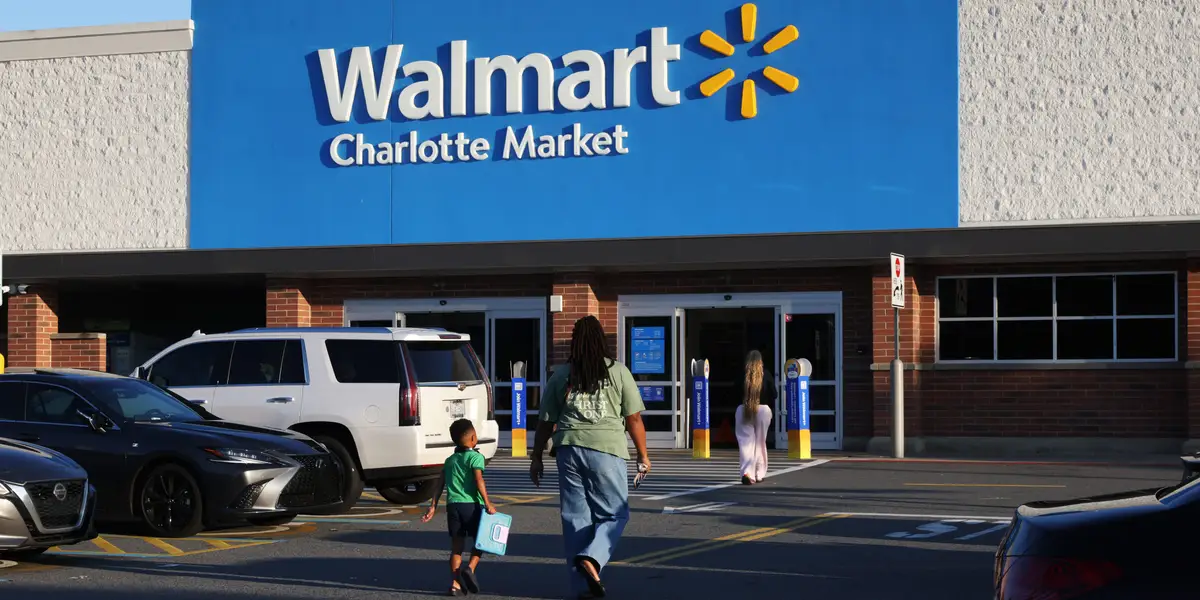
Walmart's main business is still its stores, but the company is always trying new things too. Bloomberg/Getty Images

Walmart began selling general merchandise in 1962 as a discount store in Rogers, Arkansas.

Founder Sam Walton was constantly looking for new retail concepts to try, and he did not hesitate to borrow ideas from other successful entrepreneurs.

“He just tried things, and he learned from them, and if it didn’t work, it wasn’t a failure,” CEO John Furner said during a call with reporters at Walmart’s headquarters in June. “We just learned from it.”

Last week, Walmart moved to expand its delivery service in partnership with Dunkin’, setting the company up for success collision course with delivery services such as DoorDash and Uber Eats. The retailer will eventually offer delivery from most of the 10,000 Dunkin’ locations in the U.S., moving into territory long dominated by DoorDash and Uber Eats.

Walmart described itself as “a fast-emerging competitor in the restaurant delivery industry.”

That delivery experiment is a continuation of a pattern that Furner says is part of Walmart’s DNA.

“We want to continually learn. We see where the world is going. Some things apply, some don’t,” he said. “We will learn from it and figure out how best to accelerate the business.”

Here are eight bets Walmart has made over the years in its effort to grow beyond traditional discount retail.

Home improvement

Walmart’s experiment in home improvement was short-lived.

Eric Thayer/Los Angeles Times via Getty Images

One of Walmart’s first attempts at expansion came in 1975 with the launch of the Sav-Co Home Improvement Center chain. The brand failed to take off and Walmart shifted its focus to adding new features to its stores.

Although local hardware stores were common during this time, large store formats were relatively uncommon. Home Depot didn’t open its first stores until 1979.

Pharmacy

Walmart has one of the largest pharmacy operations in the US.

John Gress/Corbis via Getty Images

One of Walmart’s first in-store experiments took place in the pharmacy sector, which began in 1978 and has since grown into one of the company’s core business areas.

Walmart filled an estimated $36.8 billion in prescriptions last year, making it the fifth-largest pharmacy in the U.S., according to the Drug Channels Institute, which tracks the pharmaceutical industry.

More recently, Walmart has ramped up its prescription delivery speed, filling some orders 30 minutes or less.

Car service

Nearly 2,600 Walmart locations include auto service centers.

Dominick Reuter/Business Insider

Walmart opened its first car care center in Oklahoma in 1979 and has expanded the service to nearly 2,600 locations across the US.

Walmart’s auto centers have also served as a testing ground for the company’s growing third-party marketplace, where customers can order products such as tires online that will be shipped to a local store for scheduled installation.

Warehouse Club

Sam’s Club had sales of $93 billion last year.

Marcin Golba/NurPhoto via Getty Images

The 1980s were a busy decade for Walmart and Sam Walton in terms of experimentation.

“’82, ’83 I think he opened four different formats in that two-year period,” Furner said in June. “Sam’s Club came out and was really successful, and with the others we decided not to continue.”

Walton’s approach to the wholesale club was modeled after Saul Price’s FedMart and Price Club concepts, the latter of which also inspired and eventually merged with Costco.

Sam’s Club now has more than 600 U.S. locations with $90 billion in sales last year.

Errand

Walmart is the American supermarket king.

Scott Olson/Getty Images

The Walmart supercenter is a quintessentially American phenomenon, but Walton famously modeled the concept after the European hypermarket format, which combined general merchandise retailing with groceries under one roof.

“It was probably five or six years before there was a store in Washington, Missouri that worked,” Furner said of Walton’s efforts to adapt the hypermarket concept to the US.

It took Walmart opening a dozen more supercenters before the idea really gained traction, he added.

There are now more than 3,500 supercenters and more than 650 convenience stores in the US. Walmart is the nation’s largest supermarket chain, raking in about one in every five dollars spent in this category, according to consumer analytics firm Numerator.

Specialty store

Walmart dabbled in specialty stores, but ultimately sold off those brands.

Stephen Zenner/SOPA Images/LightRocket via Getty Images

About a decade ago, Walmart embarked on a wave of merger activity, acquiring specialty retailers Bonobos, Moosejaw and Modcloth in an effort to expand the company’s reach with specialty brands and e-commerce customers.

All three chains remained independent of Walmart’s core business and were subsequently sold to other owners as the company refocused on its own offerings.

Advertisement

Walmart Connect and Vizio logos in Cannes.

Katie Jones/Variety via Getty Images

In 2019, Walmart brought its advertising efforts in-house with what would become Walmart Connect, which sells advertising space for the company’s physical and digital properties.

Combined with a growing third-party e-commerce marketplace and its acquisition of TV maker Vizio, Walmart’s advertising business has delivered significant revenue growth in recent years.

Delivery to restaurants

Walmart is going beyond grocery delivery with a new partnership with Dunkin’ Donuts.

Walmart

Walmart’s latest bet puts the company on course to compete more directly with food delivery apps like DoorDash and Uber Eats.

After grocery delivery customers can add meals of Subway stores in storesWalmart said in September it would bring thousands of third-party Dunkin’ locations to the service.

Walmart has already established itself as a powerhouse in fast delivery of merchandise, groceries and medicines – now it’s ready to fulfill more of what other chains are also selling.

NY Breaking News Technology Desk

Technology Reporter

The NY Breaking News Technology Desk covers technology and digital-policy developments with clear source attribution. For corrections or editorial questions, contact editor@nybreaking.com.