Hundreds of thousands of Britons may have a hidden blood disorder that puts them at greater risk of serious illness or premature death, a study has found.
Anemia – usually caused by a lack of iron, which reduces the number of red blood cells that can carry oxygen throughout the body – can cause extreme fatigue, chest pain, dizziness and headaches.
It has long been linked to things like heart failure, pregnancy complications and dementia.
Now researchers from the University of Glasgow say that people with ‘borderline anemia’ – who may not be identified under current diagnostic guidelines – are similarly at increased risk of cardiovascular disease, cancer and premature death.
The study, published in the journal Annals of Internal Medicine, analyzed data from almost half a million British Biobank participants over a ten-year period.
It is one of the largest studies of its kind into the link between hemoglobin levels, serious disease and premature death.
Scientists analyzed blood samples collected at UK Biobank centers to measure participants’ hemoglobin levels – the protein in red blood cells that carries oxygen around the body.
They found that extremes on either side – having too much or too little hemoglobin – were associated with the highest risk.
Currently, anemia is diagnosed using thresholds set by the World Health Organization (WHO) and which have remained unchanged for half a century.
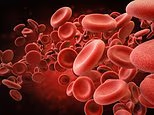
Without iron, the body cannot produce enough hemoglobin, the protein in the blood responsible for transporting oxygen throughout the body
According to current guidelines, anemia is only diagnosed when the amount of hemoglobin – the protein in red blood cells that transports oxygen throughout the body – falls below a certain level.
But researchers now think this cutoff could miss people who are at risk.
They found that people whose hemoglobin was low but still within the normal range were more likely to die prematurely than those with higher levels.
Dr. Malek Ahmad, a physician-scientist at the University of Glasgow and lead author of the study, said: ‘The risk starts to increase in borderline anemia before hemoglobin falls below the current WHO threshold.
‘Currently, many doctors don’t even recognize that someone has anemia until it is moderately severe.
‘Demonstrating that borderline anemia is associated with an increased risk and high prevalence of iron deficiency should stimulate research and treatment of a wide range of patients with mild/borderline anemia.’
Anemia is usually caused by iron deficiency, which prevents the body from producing enough healthy red blood cells. A deficiency of vitamin B12 or folic acid may also be responsible.
Common symptoms include fatigue, pale skin, irritability and a fast heart rate.
Join the discussion
Should doctors change the way they diagnose anemia to identify more at-risk patients before it’s too late?
Iron deficiency can be caused by not getting enough iron from the diet, but heavy periods and pregnancies are also common causes.
Long-term health problems, including kidney disease and conditions that cause inflammation in the body, can also lead to anemia.
Some medications can make it harder for the body to absorb iron, including common heartburn medications such as omeprazole. Calcium and zinc supplements and certain antibiotics can also interfere with iron absorption.
However, the researchers emphasized that their findings do not prove that low hemoglobin levels themselves cause people to die earlier.
They now want to investigate whether the guidelines should be updated to take into account factors such as diet, stress and obesity, which would allow doctors to spot people at risk earlier.
About two billion people worldwide are believed to be iron deficient, including 1.2 billion people who have developed iron deficiency anemia.
In Britain, an estimated 3 percent of men and 8 percent of women have the condition, while more than 57,000 people are admitted to hospital with anemia every year.
However, in many cases the condition can be treated relatively easily. A daily iron supplement – which costs as little as 10 cents per pill – may be enough to restore iron levels.
Eating more iron-rich foods can also help, including dark leafy greens like kale, fortified cereals and red meat.
It comes amid growing concerns about a rise in the number of Britons being admitted to hospital because they are deficient in essential vitamins and minerals.
Earlier this year, NHS figures revealed a dramatic increase in the number of patients admitted with anemia caused by iron deficiency, as well as diseases linked to a deficiency of B vitamins.
The Royal College of GPs warned that the cost of living crisis has made a nutritious diet ‘increasingly unaffordable’ for some people, describing the figures as ‘very worrying’.