Daily Mail journalists select and curate the products featured on our site. If you make a purchase through links on this page, we will earn a commission – learn more
Skin care enthusiasts will probably be very familiar with the different acids on the market, from glycolic acid to salicylic acid, but azelaic acid takes the upper hand. Beauty editors swear by it, and people with acne- and rosacea-prone skin have probably come across it. But which skin problems does it address? And is it gentle enough for sensitive skin? I asked three expert dermatologists to find out…
What is Azelaic Acid?
‘Azelaic acid is a natural acid found in grains such as wheat, barley and rye. It has been used in dermatology for decades,” says Dr. Jonathan Kentley, a dermatologist based in the United States London.
‘It has anti-inflammatory and antimicrobial properties and is therefore used to treat both acne and rosacea. It also supports the healthy function of how skin cells in the pores are shed, which can reduce the formation of blackheads and whiteheads, which can become inflamed areas.
‘One of the other particularly useful properties is its effect on pigmentation. Azelaic acid inhibits tyrosinase, an enzyme involved in the production of [the brown pigment] melanin, which can help gradually fade the dark spots that are often left behind after acne or inflammation.”
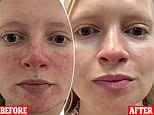
Tester Lucie tried Dr Sam’s Flawless Brightly Serum. Here she is seen before trying it (left) and after three months of use. Azelaic acid has anti-inflammatory and antimicrobial properties, which soothe redness caused by acne or rosacea
Who is it suitable for?
Potentially almost everyone. “Because it’s called an ‘acid,’ people assume it’s primarily an exfoliant,” says Dr. Sam Bunting, founder of Dr. Sam’s Skincare. But, she says, it behaves very differently.
Its power lies in helping to regulate inflammation, blemishes and pigment spots without affecting the skin’s surface.
When it comes to concentration, Dr. Bunting says 10 percent is a sensible starting place, while a higher prescription strength (15 to 20 percent) can be helpful for more persistent problems.
But Dr. Anjali Mahto, founder of the Self London Clinic, advises people who suffer from persistent redness to seek professional advice. “Azelaic acid can be very helpful for the inflammatory component of rosacea and can improve associated redness, but it does not remove telangiectasia – the visible dilated blood vessels often seen with rosacea,” she says.
‘If you treat yourself repeatedly without improvement, seek a diagnosis rather than simply changing products.’
How should you use it?
Incorporating them doesn’t mean you have to overhaul your routine. Dr. Bunting says it can work together with other actives such as retinoids or vitamin C. She recommends her The Flawless Brightly Pro Serum from Dr. Sam (£50, spacenk.com).
‘Azelaic acid can be used in the morning or evening and, once the skin is used to it, many formulations can be used twice a day,’ advises Dr Kentley.
Consistency is key. ‘There may be some improvement after about four weeks, but I would judge results over months rather than days,’ explains Dr Mahto.