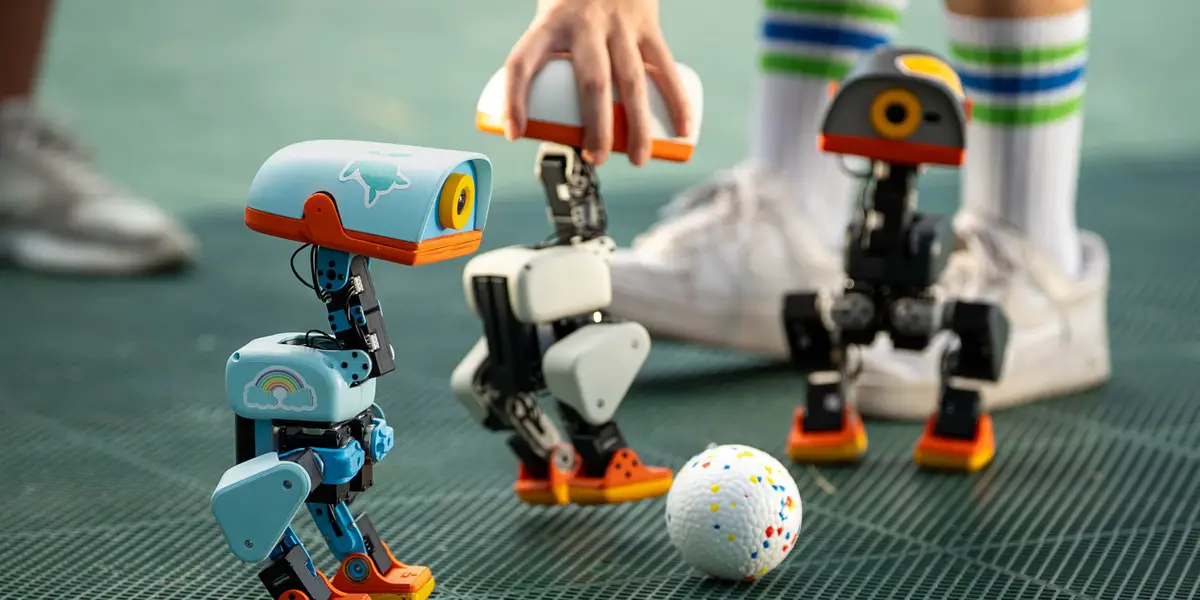
Apparently many people want a robot duck that is almost 25 cm high.
On Friday, Hugging face co-founder Thomas Wolf wrote in a post on The update came after Wolf said Thursday, about six hours after the product was announced, that preorders had already exceeded $1 million.
The $399 Microduck was unveiled Thursday by Pollen Robotics, the French robotics company Hugging Face that was acquired last year, targeting first deliveries around Christmas. The companies did not immediately respond to requests for more information about the orders.
Now there may be a small backlog.
“The community ordered a lot of ducks,” reads a red banner at the top of the company’s checkout page. “We can no longer promise Christmas delivery on new microduck orders, but we are ramping up production. First ordered, first shipped. Current estimate for new orders: 4-6 months.”
It’s part of a broader effort to take AI out of chatbots and into consumer-facing machines that can do more than just vacuum floors.
AI-powered robots have, until now, been largely confined to research labs and factory floors. Now companies including Tesla and 1X are figuring out how robots can make the leap into consumers’ homes Hyundai is floating the idea of selling robots through its car dealers.
Microduck is Pollen’s second consumer robot, following the square-headed Reachy Mini, a desktop robot that requires assembly and that users can program to make AI-powered conversations or move its antennas. Both products are aimed at developers and robotics enthusiasts.
Hugging Face says the two-legged, one-eyed Microduck is similarly programmable, but unlike its desktop predecessor, it can waddle around. From the box, the duck-like bot can walk, sit, stand, kick a small football and pick up small objects with its plastic lower jaw. He can also get back on his feet after falling over and, with rollers from a separate $39 accessory pack, skate around.
Those tricks are the starting point that users can build on. Developers can train new movements through trial and error using a virtual Microduck in a physics simulator, then transfer the resulting behavior to the physical robot.
For example, on Friday, Clément Delangue, CEO of Hugging Face, posted a video of the little bot doing gymnastics that a user has trained.
Other videos show the duck picking up small objects, such as a marker or a stray sock.
After training a new movement, developers can export it as an ONNX file, deploy it to their robot and, Pollen says, “share your new behavior with the community.” The robot also has a camera, lidar and two motion sensors that developers can access when building their own software.
The duck runs on a removable, rechargeable battery for about an hour, depending on how it is used.
Microduck’s reportedly successful debut comes at an important time for its parent company. A day before the robot was unveiled, Business Insider reported the chipmaker Nvidia was in talks to acquire Hugging Face in a deal that could value the AI startup at more than $13 billion.