As for many healthy young peoplecancer wasn’t on Nate Shalom’s radar.
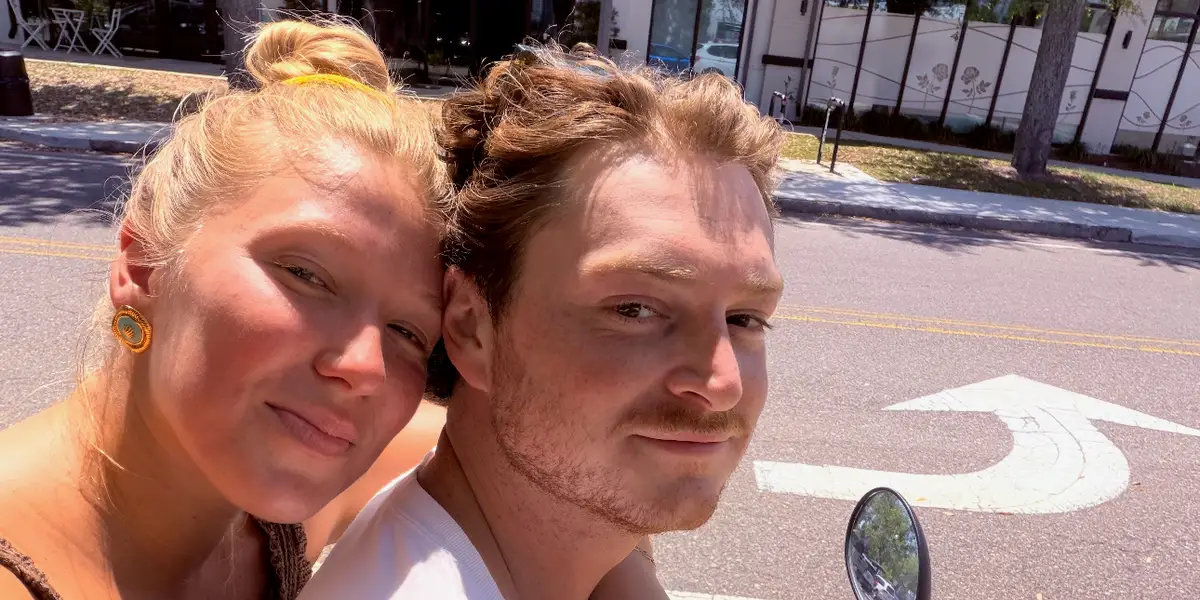
The 27-year-old, who lives in St. Petersburg, Florida, described his lifestyle as “very active.” “Blame it on my girlfriend in a funny way,” Shalom told Business Insider. “We both just can’t sit on the couch.”
The couple spent most of their time traveling, socializing with their group of friends and training for fitness challenges such as a half marathon or 75 Hard, a 75-day program that requires two daily workouts, a liter of water per day and abstaining from alcohol.
It wasn’t until Shalom met Kathy Lemoine, a woman whose 30-year-old son, Andrew Reaster, died of colon cancerthat Shalom heard about rising cancer rates among young people – including those who are fit and eat a clean diet.
Shalom, who leads one business sales of devices to medical spas, met Lemoine in November 2025 while working at a cosmetics company laser certification course in georgia.
Shalom and Lemoine started talking. Lemoine shared how her son’s only symptom before his Stage 4 diagnosis was abdominal pain and how he died six months later.
Kathy Lemoine (center), was shocked by the diagnosis of stage 4 colon cancer of her son, Andrew Reaster (left). He died 6 months later. Kathy Lemoine
“Her story was truly an eye-opener,” Shalom said. Lemoine was proactive in spreading the message and encouraging young people to get their symptoms checked out. “I’m like, ‘Okay, I’m right in the age group as her son.'”
Six months later when he started experience pain in his right testicle, abdomen and lower back, Shalom followed her advice.
Then he learned he had stage 2 testicular cancer.
His doctor at first thought it was an infection
Shalom’s first symptom was a dull ache in his right testicle, something he had never experienced before.
“Normally, if you get hit there, both of them hurt,” Shalom said. Then his testicle doubled in size, followed by stomach and back pain.
Shalom asked his close friends if they ever had similar symptoms. When they all said no, he knew the pain wouldn’t go away on its own.
Shalom (far left) confided in some of his male friends to check if they ever had the same symptoms. Nate Shalom
He booked an appointment for May 2026 with a urologist, who suspected Shalom simply had an infection, and told Shalom that his symptoms weren’t really consistent with cancer. Still, as a precaution, the doctor offered to perform an ultrasound. Shalom agreed.
“After the first appointment, I was pretty optimistic,” said Shalom, while waiting to take a simple prescription medicine.
A few weeks later, Shalom received a call from the office. A mass was found in his right testicle. In June, an MRI confirmed he had stage 2 testicular cancer because the cancer had spread to a lymph node in the abdomen.
Shalom was in shock and worried about how to break the news to his family. Even after hearing Lemoine’s story, he remembers thinking that the chances of him also developing cancer were virtually impossible, especially since there was no family history of cancer.
“I know it’s a very cliché thing to say when people say, ‘Oh, I never thought it would be me,’” Shalom said. “But actually at that moment I’m thinking, ‘Okay, I’m dealing with cancer now, and I never thought I would have to do that.'”
Navigating the treatment was difficult
While Shalom said the advantage of being an entrepreneur is flexible hours, the disadvantage is figuring out how to do that balance between work and treatmentincluding scheduling appointments.
“Everything falls on me,” said Shalom, whose job requires a lot of travel and in-person meetings. ‘I’m really behind on everything. I definitely missed deals.”
After his ultrasound, Shalom had to undergo surgery in early June to remove his right testicle, and he was told that the next available appointment for the accompanying MRI, which would confirm whether the cancer had spread, was in August, two months later.
He said it took him “probably 2 to 3 hours” of his day to push earlier MRI appointmentscheduled the day before his surgery.
Shalom said he has a great support system from his girlfriend, friends and family who helped him navigate the health care system. Nate Shalom
Shalom also had to navigate his health insurance, he added additional surgical coverage – an extra $300 a month – which he didn’t realize he needed until one of his relatives told him so.
“There’s just a lot of little things that you come across and you’re like, ‘I didn’t even think of this,’” Shalom said. “’And thank God one person just said that.’”
Ultimately, he said Lemoine’s story reminded him of the importance of acting quickly: “It kept me from brushing it off or feeling comfortable waiting longer.”
He stays in touch with the woman who first warned him
Shalom is currently halfway through a three-round series chemotherapy treatmentwhich is expected to end at the end of September. Each round required him to stay in the hospital for five days straight, receive infusions for five hours a day, and then have one infusion visit per week for the next two weeks.
So far he has experienced some serious side effects, including losing all his hair and feeling constantly nauseous and tired. He said he is grateful for his support system, including his girlfriend, parents, stepfather and friends, who have gone to appointments with him and visit regularly.
He is also grateful to have met Lemoine, who came to Florida to surprise him after his surgery. He said her story made him realize how easy it was brush away symptomsespecially if you are young and healthy.
What struck him was that she wished her son had gotten screened sooner, even though Reaster had no known symptoms prior to his abdominal pain right before the diagnosis.
“She said, ‘If we had had it investigated a year ago, maybe things could have been different,’” Shalom said. “If it wasn’t for her, I don’t think I would have really checked out.”