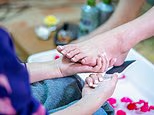
After one of the longest and hottest summers in years, our feet had nowhere to hide. Months of sandals, open-toed shoes, holidays and bare feet around the pool have put them firmly in the spotlight – highlighting a growing change in the way we think about our feet and how we care for them.
For years, the traditional pedicure was mainly about aesthetics: cutting nails, filing away some hard skin, choosing nail polish and done.
But now there is a demand for treatments that combine beauty, wellness and podiatry expertise TikTok is full of before-and-after photos of the latest foot craze: the Medi-Pedi.
TikTok is teeming with before-and-after photos of the latest foot craze: the Medi-Pedi
Users say this three-in-one approach, combining medicine, aesthetics and wellness, isn’t just about how your feet look when you leave the salon. It’s about how they feel, their underlying health, and identifying and treating common skin and nail problems such as corns, calluses, cracked heels and problematic toenails.
We carefully consider who treats our face, skin and hair, yet our feet have always been something of an afterthought – often ignored until the week before a summer holiday.
But that is changing. Maggie Trevillion, owner of Medi-Pedi salon Call Olivesays consumers are much more informed about self-care.
She says: ‘We see customers prioritizing their feet all year round rather than just booking a treatment before the holidays.
‘Our feet lead and carry us everywhere, every day. They deserve the same maintenance and attention that we routinely give to the rest of our bodies.”
According to Trevillion, expectations have also changed. Customers don’t want foot care to feel clinical. Yes, they want expertise, but they also want an experience, and they want to see and feel a real difference.
Trevillion says: ‘Customers want to walk into beautiful surroundings, relax, unwind and feel genuinely cared for, whilst enjoying some well-deserved rest and relaxation. A Medi-Pedi must offer both: professional foot care in addition to the luxury and experience we have come to expect from our other beauty and wellness treatments.’
So what is the Medi-Pedi?
‘It’s about much more than clipping toenails. A podiatrist is a certified healthcare professional, and we can learn a tremendous amount by examining a person’s feet, skin and nails,” says Trevillion.
‘The health of your skin and nails can say a lot about your overall health and well-being. During a podiatry-guided Medi-Pedi, we don’t just make the feet look better. We assess what we see and treat it appropriately. What a client assumes is simply dry skin could be something completely different. A thick or discolored toenail is not automatically a fungus, and a sore on hard skin could be a corn caused by pressure.’
This is where Trevillion emphasizes the medical element – the ‘Medi’ – of the pedicure – the ‘Pedi’. Rather than simply covering something up, therapists will ask what it is, why it’s happening, and what they can do about it.
Trevillion says the transformation is one of the most satisfying parts of her job.
‘For me, the transformation is one of the most satisfying things about my job. The results are often immediately visible and tangible. Using medical training and specialist instruments, we can professionally reduce hard skin, treat corns where necessary, carefully care for the nails and finish by moisturizing the feet.
‘I’m biased of course, but the results can be incomparable to a quick toenail polish. Feet can look and feel smoother, softer, healthier and incredibly well-cared for.”
Summer can also pose risks to foot health. In warm weather, our feet sweat more, we walk barefoot more often and we spend more time in swimming pools, changing rooms and communal showers. This is not good for foot hygiene. Warm, moist environments can promote fungal infections, while common areas can increase exposure to viral infections such as plantar warts.
And Trevillion warns against traditional pedicures. She says: ‘They definitely have their place, but consumers need to understand the difference between a beauty treatment and a clinical foot treatment. The beauty industry should not be held to the same infection control standards as the healthcare industry.
‘Sharing nail files, foot files or inadequately disinfected instruments can lead to bacterial, viral and fungal infections of the skin and nails spreading through cross-contamination.
Summer can also pose risks to foot health
‘In a Medi-Pedi clinic, nail files and buffers are single-use, while reusable clinical instruments undergo an appropriate decontamination and sterilization process after each patient. Simply placing instruments in the familiar blue disinfectant solution – often called Barbicide – is not the same as sterilizing them. That’s an important distinction.’
Five things to consider for your next pedicure
How hygienic is the salon?
‘Whichever pedicure you book, don’t be ashamed to ask about hygiene. Ask whether files and buffers are single-use, how reusable instruments are decontaminated and sterilized, and what happens if the practitioner notices anything unusual. You have to have complete confidence in what is being used on your feet.”
Is there an underlying problem?
‘One of my biggest concerns is the temptation to camouflage a problematic toenail with nail polish or gel, rather than finding out what’s causing it. If a nail becomes discoloured, thickens or becomes more crumbly, separates from the nail bed or changes significantly in appearance, it should ideally be assessed before covering. A discolored nail doesn’t necessarily have to be fungal, which is exactly why professional assessment is important.”
Should I seek treatment instead of disguise?
‘Fungal nail infections are a common example. Nail polish does not address the underlying cause, and continually covering up a suspicious nail may mean the problem is not investigated until it has become much more obvious.
‘It is interesting that in the clinic we often see that men are more likely to report for fungal nail treatment than women. One possible reason is that women may hide a nail they don’t like under varnish and continue to do so until they reach the point where they can no longer hide it.”
What is my therapist qualified to do?
‘Beauty professionals also have limits to what they can treat. Suspected fungal infections, plantar warts, painful corns and unexplained skin or nail changes should be referred to a suitably qualified healthcare professional, rather than simply hidden.
‘The words ‘medical pedicure’ alone are not sufficient when choosing a location. If you want a podiatry-led Medi-Pedi, find out who will actually carry out your treatment and check that they are registered with the Health and Care Professions Council (HCPC).
‘Podiatrist and podiatrist are protected professional titles in Great Britain. Ask about infection control procedures and what will happen if anything is discovered during your appointment that requires further investigation or treatment.’
Is the treatment personalized?
‘The most important thing is that the treatment must be personalized. There shouldn’t be a one-size-fits-all approach to nail clipping or removing every bit of hard skin. More aggressive doesn’t mean better.
‘Professional removal of calluses, corns and problematic nails requires clinical skill and judgment, and a Medi-Pedi shouldn’t hurt or make your feet bleed in the quest to get them ready for summer.’
When it comes to beautiful feet, the definition of pampering is changing. It’s no longer simply about having perfectly painted toenails – it’s about having feet that are healthy, comfortable and beautifully cared for that you can confidently show off or share on TikTok!
The rise of the Medi-Pedi reflects a shift towards beauty and wellness treatments that prioritize health over aesthetics. And after one of the hottest summers in years, with our feet more visible than ever, perhaps it’s finally time they got the same care and attention as the rest of us.