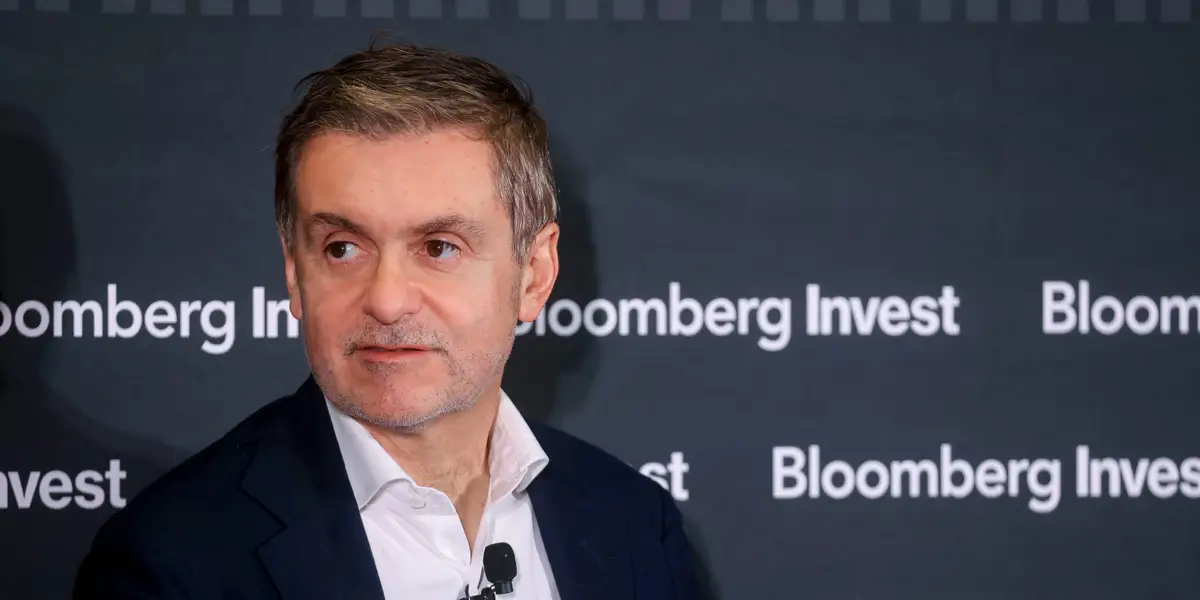
Marco Argenti faces a new problem: how to convey the subtleties of Goldman Sachs’ tech culture to an AI bot.
Argenti, the company’s chief information officer, said that since the company’s 12,000-plus developers all use AI, the focus is on making their AI tools Goldman-specific. All of the bank’s developers have access to updated agentic technology, including Claude and Devin, Cognition’s AI coding assistant. They now have to figure out how to “mentor” the AI, just as they would with a new hire new to Goldman’s standards. An AI agent familiar with Goldman’s environment (for example, its data standards or security protocols) can produce better work and be reviewed by engineers more quickly.
“The transfer of the institutional knowledge to the AI is the biggest question,” Argenti said. “What does an experienced GS AI look like versus a naive AI?”
Transfer of ‘tribal knowledge’
Goldman spent some time $6 billion in technology last year and, like its peers, is under increasing pressure to show that its investments are paying off. Jamie Dimonthe CEO of JPMorgan, said spending on AI is a prerequisite to staying competitive right now.
Developers are often the most advanced AI users at banks, and Argenti said they now need to teach AI agents the “tricks and tribal knowledge” that the technology doesn’t intuitively understand. Goldman’s “technical principles,” as described in a blog post on the firm’s website, include “innovating incrementally” and “seeing around corners,” subjective guidelines that AI tools can’t grasp as easily as routine instructions.
The company has developed “skills” – reusable bundles of instructions for performing specific tasks – to capture developers’ technical knowledge of Goldman, such as its design principles, data models and environments used. For example, one skill explains how to migrate information to the cloud; the “cloud fast track” skill teaches AI what good cloud migration looks like, especially at Goldman. This skill makes AI tools more useful to those tasked with cloud migration, just as an experienced employee would likely be more useful than a new employee.
“The unwritten rules are actually more difficult to capture. That’s why we try to systematize them by conducting these assessments,” Argenti said.
As part of the effort, Argenti said, Goldman has been studying its internal processes, including conducting interviews and analyzing the results. The bank regularly updates its skills as its internal processes evolve, creating a “constant loop of improvement” in which the agents’ code becomes both better and more specific to Goldman.
Mentorship is changing
At this point in the Bank AI rolloutengineers don’t spend as much time coding, but instead ensure that their agents do a good job to exacting standards. It’s a profound change, Argenti said, and one that will likely become relevant to other industries.
AI is also changing mentorship among people at the bank, Argenti said. While junior employees typically turn to managers for advice, they are now mentoring company veterans on how to use AI, both in structured and unstructured ways. Other companies are leaning toward similar peer-to-peer programs – at Citi, thousands of employees have volunteered to work as “AI accelerators” for their colleagues.