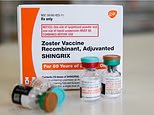
A study has found that vaccination against shingles can reduce the risk of heart disease, heart failure and stroke.
According to experts, if all people over 60 were to receive the shot, tens of thousands of deaths could be prevented.
It follows research suggesting the vaccine is also linked to a lower risk of dementia.
Shingles is a painful and serious condition caused by the reactivation of the chickenpox virus. It becomes more dangerous with age and can lead to long-term nerve pain, hearing loss and blindness.
An injection that protects against the disease – Shingrix – is available on the website NHS for people who have turned 65, people between 70 and 79 years and people aged 18 and over with a severely weakened immune system.
The NHS previously used a vaccine called Zostavax, but this was replaced by Shingrix almost three years ago.
Now researchers from the University of Oxford believe the jab could reduce the risk of a serious cardiovascular event by as much as 12 percent.
“If confirmed in clinical trials, this could be the first vaccine to protect both the heart and brain,” said Dr Maxime Taquet, associate professor in the Department of Psychiatry at Oxford and lead author of the study.
“The hope is that our research will at least help boost vaccination rates, for which the benefits could be enormous.”
A major study has added to growing evidence that the shingles vaccine could protect against heart disease
The study – published in the journal Nature Medicine – analyzed data from more than 70,000 adults aged 60 and over in the US, who switched from taking Zostavax to Shingrix in October 2017.
This allowed researchers to compare the risk of cardiovascular events over a seven-year period in those vaccinated with Shingrix with those who received Zostavax.
The two groups were compared on dozens of factors that could influence heart health, including age, gender, ethnicity, existing diseases and medication use.
Those vaccinated with the newer Shingrix vaccine were 10 percent less likely to develop coronary artery disease — in which the arteries that supply blood to the heart become clogged with fatty deposits, increasing the risk of heart attack and heart failure.
Shingrix was also associated with a 12 percent lower risk of heart failure over the subsequent seven years.
The benefit was seen in both men and women, with men also showing a 12 percent increase in the time they lived without a stroke.
The vaccine was also found to be ‘good value’ for the NHS for people over 70.
Several studies seeking to provide more definitive evidence are now underway.
Join the discussion
Should vaccines that can prevent dementia and heart disease be mandated for older adults?
Experts in the field not involved in the study have welcomed the findings, which they say “reinforces the obvious benefit of the shingles vaccination.”
The vaccine works by teaching the immune system to recognize and fight the virus that causes shingles.
But it also contains chemicals that experts believe boost the immune system.
Professor Ian Jones from the University of Reading said: ‘It is possible that this immune shock also clears persistent low-level inflammation that would otherwise develop into later clinical disease, including neuronal and cardiovascular disease.
‘The data reinforces the obvious benefit of the shingles vaccination, but also suggests that there may be an immune dimension to a number of age-related conditions and that focusing on boosting immunity could be beneficial overall.’
Dr. Mark Russell, a rheumatologist at King’s College London, added: ‘Although the benefits on an individual basis are relatively small, millions of people receive a shingles vaccination, meaning that even a small cardiovascular benefit could translate into a significant number of preventable cardiovascular events on a population level.’
Shingles is caused by a resurgence of the herpes zoster virus in people who have previously had chickenpox.
About 200,000 people in Britain develop shingles every year. Over a lifetime, approximately one in four people will develop the condition.
The findings follow a body of evidence suggesting the vaccine may also reduce the risk of dementia, although a cause-and-effect relationship has not yet been proven.
A large study at Stanford University in California last year found that older adults who received the vaccine were about 20 percent less likely to develop the condition over the next seven years.
More recently, researchers in the US reported that people who received the newer Shingrix vaccine were 24 percent less likely to be diagnosed with dementia over a four-year period than their unvaccinated peers.
The latest findings build on this research by suggesting the jab’s benefits could extend beyond brain health.
Heart disease remains one of the biggest causes of death in Britain, claiming around 175,000 lives every year. It is believed that more than 7.6 million people suffer from cardiovascular disease.
Dementia affects almost a million people in Britain, with that figure expected to rise to 1.4 million by 2040 as the population ages.