


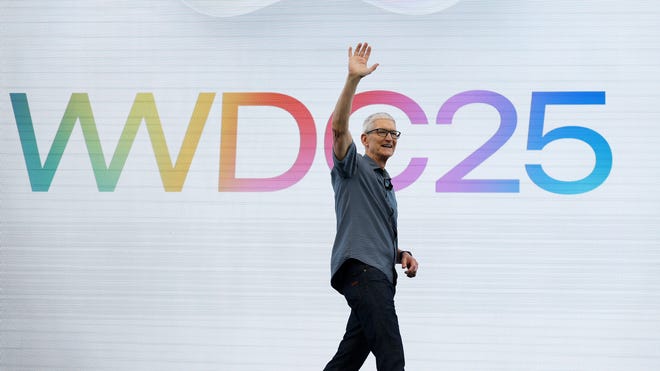

Apple just did what Apple does best — it waited, watched, and then dropped a game-changing innovation that could redefine how we interact with AI. At WWDC 2025, Apple introduced “Apple Intelligence,” its own suite of AI tools and features built directly into iOS, macOS, and iPadOS. And make no mistake, this isn’t just another AI assistant — it’s Apple’s bold entry into a space dominated by ChatGPT, Gemini, and Copilot.
What Is Apple Intelligence?
Apple Intelligence is a system-wide AI layer built into Apple devices. It blends generative AI capabilities like summarization, image generation, smart replies, and personal context awareness, all while heavily emphasizing on-device privacy. With this, Siri isn’t just smarter — it’s finally becoming useful.
🔍 Reality Check: Why Apple Took Its Time
While Microsoft and Google have been pushing their AI solutions aggressively, Apple held back. But that was deliberate. According to Bloomberg, Apple focused on three pillars: privacy, device integration, and real-world utility. Apple Intelligence isn’t just flashy — it’s usable, secure, and integrated at the core of the user experience.
Key Features That Break the Mold

1. Smart Summarization & Priority Notifications
Your iPhone can now summarize long emails, articles, and even missed notifications — saving you time and screen fatigue.
2. Genmoji: Personalized Emojis
Using generative AI, you can now create emojis based on prompts like “cat with sunglasses” or “dancing avocado.” Quirky? Yes. Addictive? Absolutely.
3. Image Playground
Apple’s own image generation tool lets you generate images in sketch, animation, or realistic styles — and it works inside apps like Messages or Notes.
4. Writing Tools Everywhere
Apple has baked smart AI writing tools across Mail, Safari, Notes, and Pages. Whether you’re drafting an email or summarizing a web page, AI’s got your back.
5. Private Cloud Compute
Apple uses on-device models for most tasks. When offloading to servers, it uses a new architecture called “Private Cloud Compute,” which doesn’t store your data — aligning with Apple’s hardcore privacy stance.
Source: Apple Newsroom
📌 Insight: OpenAI x Apple — A Game-Changing Alliance
Perhaps the biggest twist? Apple is partnering with OpenAI. When your device needs broader intelligence, it can use ChatGPT 4o — built right into Siri and other apps. It’s optional, and you’ll always be asked before sharing your data.
✅ Takeaway: Apple didn’t build ChatGPT from scratch, but it made it usable for the average user. That’s how Apple wins — by simplifying the complex.
The Impact on Siri
Siri has long been the butt of AI jokes. But not anymore. With Apple Intelligence, Siri gets context awareness, memory, and on-screen intelligence. You can now say things like, “Remind me to check this article later,” and Siri knows what “this” is.
💡 Pro Tip: You can even ask Siri to find files your friend sent you last week, even if you forgot the name — that’s contextual memory in action.
How Apple’s AI Stands Out from Google & Microsoft
| Feature | Apple Intelligence | Google Gemini | Microsoft Copilot |
|---|---|---|---|
| On-Device AI | ✅ Yes | ❌ Mostly cloud-based | ❌ Cloud-heavy |
| Privacy Focus | ✅ Encrypted, local | ⚠️ Varies | ⚠️ Enterprise-level |
| System-wide Integration | ✅ Deeply baked into OS | ⚠️ App-specific | ⚠️ Office-centric |
| ChatGPT Integration | ✅ Built-in via Siri | ❌ | ✅ Copilot (OpenAI) |
Source: The Verge
🔍 Reality Check: Not for Everyone… Yet
Apple Intelligence won’t run on all devices. You’ll need at least:
- iPhone 15 Pro / Pro Max
- iPad with M1 chip or later
- Mac with M1 chip or later
That’s a big limitation, but it also shows that Apple is building AI for the future, not legacy hardware.
What’s Next?
Developers are already getting access to APIs. In the next year, we can expect a wave of third-party apps using Apple Intelligence. Imagine booking a trip with an app that remembers your budget, flight preferences, and even allergies.
✅ Takeaway
Apple’s late AI entry wasn’t a flaw — it was strategic. While others sprinted, Apple studied the course. Now it’s sprinting ahead with a product that balances power, privacy, and polish.